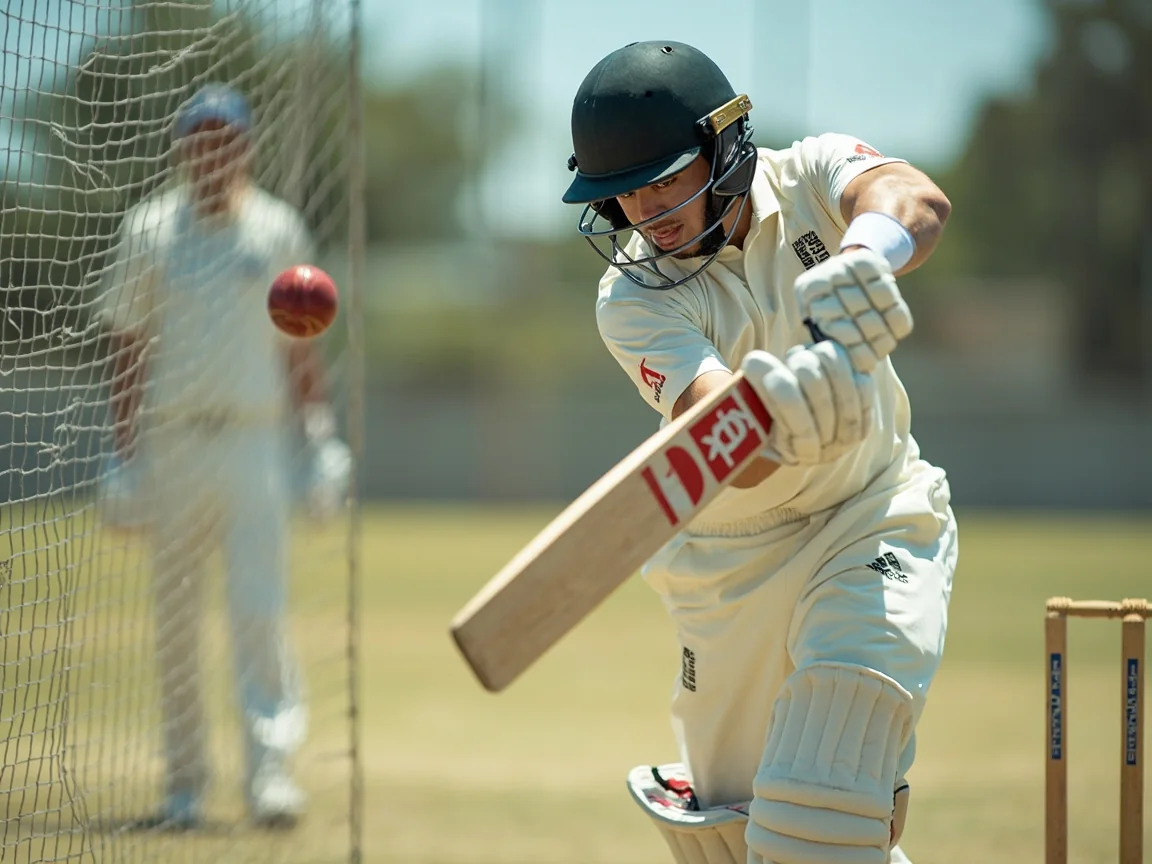
Form tracker: top six batters by recent balls faced and dot percentage
A form guide sorted by the metric that actually drives fantasy points, not by reputation.
How the desk reads form
The desk reads form through one question: what does the metric that drives fantasy points look like for this player over the last five appearances? Reputation does not enter the calculation — only the underlying numbers and the role they occupy.
For batters, the metrics that matter are balls faced per innings, dot-ball percentage, boundary percentage and batting position. For bowlers, the metrics that matter are overs per match, dot-ball percentage, wicket share and the phases they operate in.
Form reads are anchored in the last five appearances. When a player has fewer than five appearances this season, the desk widens the window. When the data is thin, a small-sample warning is shown next to the claim.
Top-six batters by recent balls faced
The desk's top-six batters by recent balls faced are not the most-owned batters — they are the batters who have actually faced the most deliveries in their last five innings. Some of them are high-profile, some are role players who happen to have held their position through the order.
The top of the list is dominated by top-order batters who have batted through the powerplay. The middle of the list includes middle-order batters who have held their position through the order. The bottom of the list includes lower-order batters who have batted in finishing roles.
The list changes match by match. The desk publishes a rolling read so you can see which batters are tracking up and which are tracking down.
Bowling usage and dot percentage
The desk's bowling reads are anchored in overs per match and the phases the bowler operates in. A bowler who has been promoted to the powerplay is a different fantasy asset than the same bowler operating in the middle overs.
Dot-ball percentage is one of the most reliable predictors of fantasy value for bowlers. The desk tracks dot percentage by phase — powerplay, middle and death — separately. A bowler who has a high dot percentage in the powerplay is worth tracking even if their wicket share is moderate.
The death-overs bowling is the highest-impact phase for fantasy. The bowler who holds the death overs for a winning team has historically produced the highest fantasy returns at the role.
All-rounders and role volatility
All-rounders are the most volatile role in fantasy IPL. The role can swing from match to match depending on the team's needs, and the fantasy value can swing with it. The desk tracks all-rounders through their role usage, not their headline batting or bowling numbers.
The highest-value all-rounders are the ones who bat in the top six AND bowl in the death overs. They produce fantasy points through three roles: batting, bowling and fielding. The differential play is to captain an all-rounder in a match where both their batting and bowling roles align with the venue.
The desk flags role changes for all-rounders because they drive fantasy value. A bowler promoted to the powerplay is worth tracking even if their headline wicket share is moderate.
What to watch in the next update
The desk's form tracker is updated after every match. The next update will reflect the role changes from tonight's match and any squad moves that have been confirmed since the last update.
If a bowler is promoted to a new phase, the tracker will flag the role change and the fantasy implication. The desk's role-change alerts are designed to catch these signals early.
Re-check the tracker before locking your team. Form reads can shift quickly, especially around role changes.
Reader questions
What window does the form tracker use?
Why does the desk use balls faced instead of runs scored?
What does the desk mean by 'small-sample warning'?
How to read the desk's blog
The editorial blog is the desk's running log: match-day reporting, fantasy analysis, captain picks, role-change alerts and venue reports, published as the news arrives. The blog is organised by topic filter — match, squad, venue, fantasy — so readers can find the analysis they need without scrolling through everything the desk has published.
Each blog post carries a timestamped update, a data cut-off and a labelled correction note when material details change. The desk publishes corrections visibly, not silently — material claims are revised with the original line, the updated line, the reason and the time of correction.
The blog is also where the desk publishes role-change alerts, which are the most reliable fantasy signal in any given match. Role changes drive fantasy value far more reliably than batting position moves, and the blog is the place to find them as they happen.
The blog index is updated daily. The desk's recommended path through the blog is to start with the latest match briefing, then check the role-change alerts, then read the captain picks and the venue report. The blog's job is to give a fantasy team builder enough current information to make a selection decision.

How the form tracker evolves through a season
Tracking form across an IPL season means tracking the underlying metrics that drive fantasy value, not the headline numbers. The desk's form tracker uses balls faced per innings for batters, dot-ball percentage and wicket share for bowlers, and role usage for all-rounders.
For batters, balls faced is the headline metric. The desk ranks batters by recent balls faced because balls faced is a better proxy for fantasy value than runs scored. A batter who has faced 30 balls in a low-scoring match has produced more fantasy value than a batter who scored 40 off 20 balls in a high-scoring match.
For bowlers, dot-ball percentage by phase is the headline metric. A bowler with high dot-ball percentage in the powerplay is worth tracking even if their wicket share is moderate. The desk tracks dot-ball percentage separately for powerplay, middle and death overs.

For all-rounders, role volatility is the headline read. All-rounders are the most volatile role in fantasy IPL because their role can swing from match to match depending on the team's needs. The desk tracks all-rounders through their role usage, not their headline batting or bowling numbers.
Form reads are anchored in the last five appearances as the default window. When a player has fewer than five appearances this season, the window is widened. Where the underlying data is thin, a small-sample warning is published next to the claim. The desk does not invent probability percentages or claim prediction accuracy it cannot substantiate.

How the desk closes the loop
Form reads are anchored in the last five appearances as the default window.
When a player has fewer than five appearances this season, the window is widened.
Where the underlying data is thin, a small-sample warning is published next to the claim.
The desk does not invent probability percentages or claim prediction accuracy it cannot substantiate.

The form tracker is updated after every match.
The next update will reflect the role changes from the most recent match and any squad moves that have been confirmed since the last update.
If a bowler is promoted to a new phase, the tracker will flag the role change and the fantasy implication.
The desk's role-change alerts are designed to catch these signals early.
Reading the form tracker across a season means tracking the inputs that shift week by week.
Squad moves, role changes, venue conditions and toss-time news all feed the desk's read.
The tracker is updated whenever a material input shifts, with the reasoning visible so you can challenge the desk's read.
Where the underlying data is thin — early-season matches, small sample sizes, brand-new squad combinations — the desk publishes a small-sample warning next to the relevant claim.
The desk's editorial discipline on the form tracker is the same as across the rest of the coverage.
Every published claim is dated, every prediction carries the data cut-off used to build it, and every correction is published visibly on the affected page.
The desk never claims certainty it cannot substantiate.
Read the latest analysis before you lock your team
Predicted XIs, venue report and captain picks — all timestamped and sourced. Revisit before toss for the post-toss update.