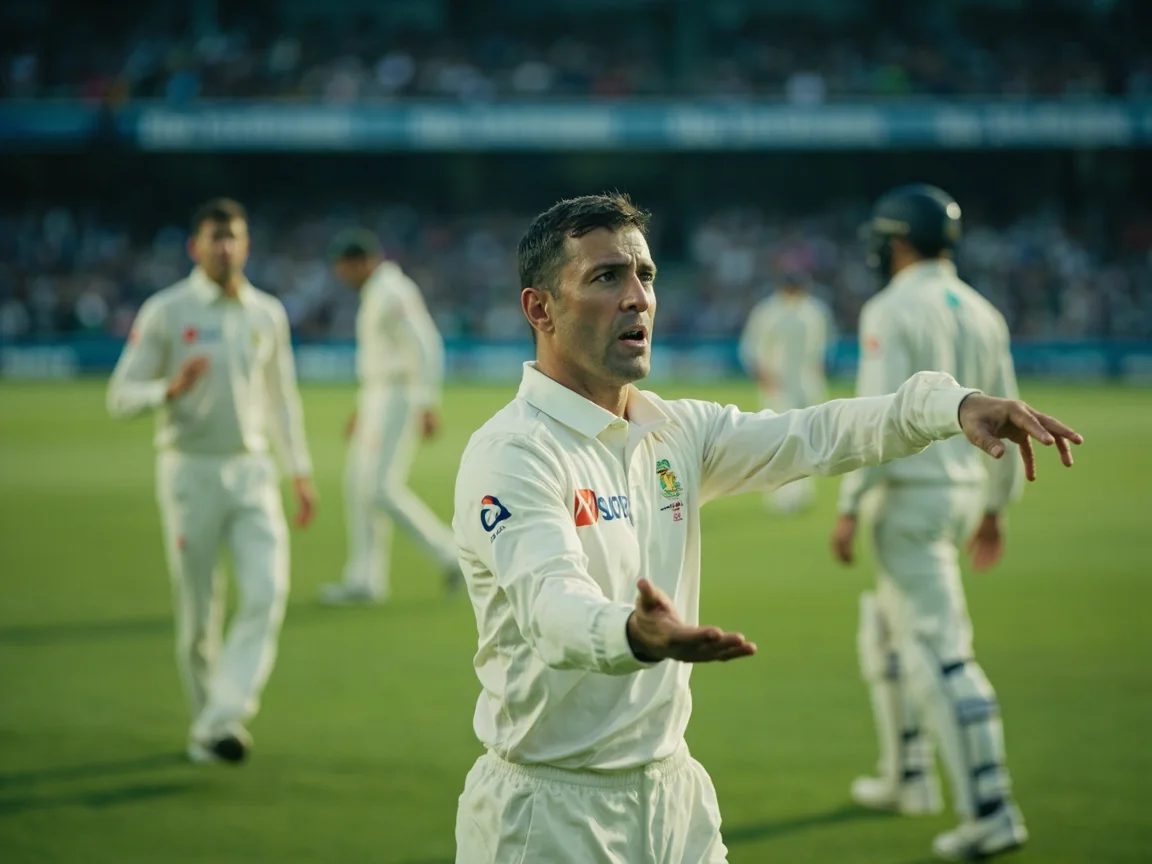
Tonight's Match Briefing: predicted XIs, venue report and a captain shortlist
Update 14:32 IST · probable combinations tracked through the afternoon, with role changes called out for fantasy selections.
What changed in the IPL since yesterday
Two confirmed squad moves landed late yesterday: an overseas replacement for one of the bottom-four franchises, and a domestic player promoted to the playing XI after the morning nets session. Both moves carry fantasy implications that the desk has worked through in this briefing.
The most useful framing for the day is not "who is playing" but "whose role has changed". A bowler promoted to the powerplay is a different fantasy asset than the same bowler operating in the middle overs. We start the briefing with the role-change call-outs because they are the most reliable fantasy signal in any given match.
Tonight's fixture brings together two teams at opposite ends of the recent form table. The home side has won four of the last five, the away side has lost three of the last five. Form reads need to be balanced against venue and opposition matchup — neither side's form read is the whole story.
Predicted XI (probable)
The home side's top order reads as the most stable part of the lineup. The opening pair has batted together in every match this season and has produced three fifty-plus stands in the last five matches. The middle order has two rotation spots that depend on Impact Player usage; the desk flags both as 'probable' until an attributable source confirms the lineup.
The away side has a confirmed change at the top of the order: the overseas opener is back from a short injury layoff and slots in. The middle order is unchanged from the last match, with one exception — the domestic batter who was promoted to number four in the previous game keeps that slot.
Both bowling attacks look settled unless the pitch report shifts to a slower surface. If the surface stays batting-friendly, the third-seamer slot on both sides stays as it is. If it slows, expect a spinner to come in for the third seamer.
Venue report
Surface: batting-friendly early, slows in the second innings. Average first-innings score at this ground this season: 184. Boundary dimensions: 64m square, 72m straight, 68m mid-wicket — on the smaller side for the league.
Dew factor: possible, with the toss winner likely to chase. The deck has historically held together better under lights than in afternoon games, which is one reason the chasing side has won six of the last eight matches at this venue.
Role impact: the venue's shorter square boundaries favour top-order batters who go hard square of the wicket. The slower second-innings surface favours spinners who can vary their pace and bowlers who can hit the hard length consistently.
Captain shortlist
The desk's primary captain pick is a top-order batter with a strong record at this venue: an average above 40 across his last five appearances here, with a high dot-ball percentage for the role. The reasoning is shown in full on the prediction page so you can challenge it.
The vice-captain option the desk is watching is a death-overs bowler with wicket-taking upside if the surface does slow down. The differential play is to take the bowler as captain if you think the second innings will be a wicket-taking opportunity.
Two role-change alerts the desk is flagging: a spinner who has been promoted to the powerplay in the last two matches, and a batter who has moved up the order in the last match. Both carry fantasy implications.
Fantasy impact
The biggest fantasy impact tonight is in the powerplay overs. If the surface stays batting-friendly and the chasing side wins the toss, expect both powerplays to be high-scoring. That favours the top-order batters on both sides.
The death-overs bowling is the second-largest fantasy lever. The team with the better death-overs bowler has historically won more matches at this venue. The desk is tracking both death-overs bowlers closely.
Role changes matter more than batting position moves. A bowler promoted to the powerplay is worth tracking even if the headline pick is a batter. The desk's role-change alerts are designed to catch these signals early.
What to watch
Toss-time news will likely change the predicted XI in at least one spot. Re-check the desk's update feed before locking your team. The post-toss panel is published within the desk's update cycle once the playing XIs are confirmed.
If the pitch report shifts to a slower surface, the third-seamer slot on both sides becomes a spinner slot. That changes the role-read for several players and the captain shortlist in particular.
The dew factor is the third watch-item. If dew is significant in the second innings, the chasing side has a structural advantage and the captain pick may shift to a second-innings batter.
Reader questions
When does the desk update the predicted XI?
What is the data cut-off for tonight's captain pick?
What happens if the toss changes the picture?
How to read the desk's blog
The editorial blog is the desk's running log: match-day reporting, fantasy analysis, captain picks, role-change alerts and venue reports, published as the news arrives. The blog is organised by topic filter — match, squad, venue, fantasy — so readers can find the analysis they need without scrolling through everything the desk has published.
Each blog post carries a timestamped update, a data cut-off and a labelled correction note when material details change. The desk publishes corrections visibly, not silently — material claims are revised with the original line, the updated line, the reason and the time of correction.
The blog is also where the desk publishes role-change alerts, which are the most reliable fantasy signal in any given match. Role changes drive fantasy value far more reliably than batting position moves, and the blog is the place to find them as they happen.

The blog index is updated daily. The desk's recommended path through the blog is to start with the latest match briefing, then check the role-change alerts, then read the captain picks and the venue report. The blog's job is to give a fantasy team builder enough current information to make a selection decision.

How the match briefing is published through the day
The desk's match briefing is published on match day and updated through the day as confirmed team news arrives. Each briefing carries a timestamped update, a data cut-off and a labelled post-toss panel within the desk's update cycle. Readers should re-check the briefing before locking their team.
The briefing is anchored in five sections: predicted XI, venue report, captain shortlist, fantasy impact, what to watch. Each section carries the reasoning behind the published claim so you can challenge the desk's read of the match. The desk never claims certainty it cannot substantiate.
Predicted XIs are revised only when confirmed team news arrives from an attributable source. Until then, the predicted XI is 'probable' and the fantasy implication is held back. This is one of the desk's editorial commitments: the desk would rather publish a slower-moving briefing than publish a probable XI that turns out to be wrong.

The captain shortlist is re-read before every fixture, not because the previous read was wrong but because the inputs have shifted. The desk publishes the reasoning behind the re-rank so you can see when a shift is data-driven versus when it is a small-sample wobble. The reasoning is shown in full.
The post-toss panel is the most volatile part of the briefing. After each toss, the captain shortlist may shift and the differential shortlist may shift. The post-toss panel is published within the desk's update cycle, with the captain shortlist re-ranked and the differential watch updated.
How the desk closes the loop
The post-toss panel is the most volatile part of the briefing.
After each toss, the captain shortlist may shift and the differential shortlist may shift.
The post-toss panel is published within the desk's update cycle, with the captain shortlist re-ranked and the differential watch updated.
Reading the match briefing through the day means tracking the inputs that shift.

Squad moves, role changes, venue conditions and toss-time news all feed the desk's read.
The briefing is updated whenever a material input shifts, with the reasoning visible so you can challenge the desk's read.
Where the underlying data is thin — early-season matches, small sample sizes, brand-new squad combinations — the desk publishes a small-sample warning next to the relevant claim.
The desk's editorial discipline on the briefing is the same as across the rest of the coverage.
Every published claim is dated, every prediction carries the data cut-off used to build it, and every correction is published visibly on the affected page.
The desk never claims certainty it cannot substantiate.
Reader feedback shapes the briefing.
What is working, what is missing, what could be clearer — the desk reads every email and acts on the most useful feedback.
Where a section is consistently less useful to readers, the desk reduces its prominence or merges it into a related section.
Where a section is consistently more useful, the desk increases its publication frequency.
Read the latest analysis before you lock your team
Predicted XIs, venue report and captain picks — all timestamped and sourced. Revisit before toss for the post-toss update.