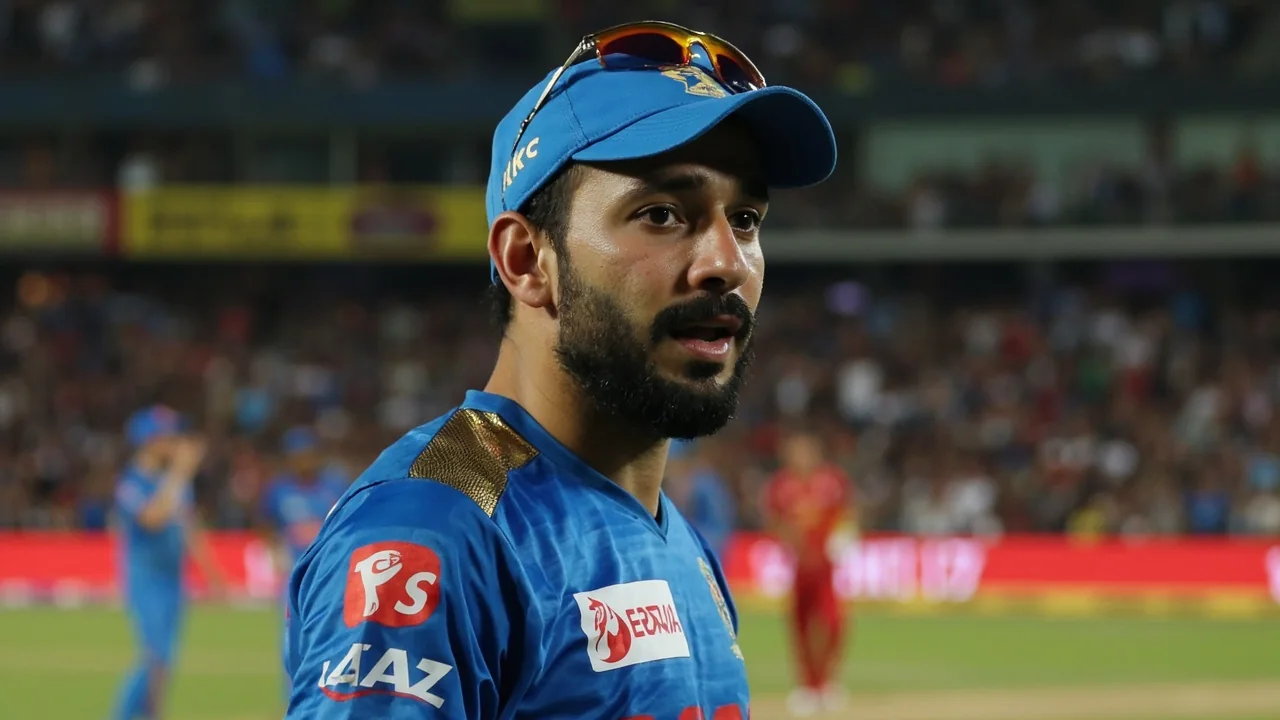
Royal Challengers Bengaluru beat Mumbai Indians by two wickets in last-ball Raipur chase
Royal Challengers Bengaluru completed a last-ball chase of 167 to beat Mumbai Indians by two wickets at Raipur, with Krunal Pandya's 73 and Bhuvneshwar Kumar's 4-for turning the script after Tilak Varma's 57 had given Mumbai a defendable total.
What happened in Raipur
Royal Challengers Bengaluru completed a last-ball chase of 167 to beat Mumbai Indians by two wickets in Raipur, finishing with eight wickets down on the final delivery of the match. The result went down as the closest finish of the evening, and it carried the kind of late-innings swings that have defined the 2026 cycle.
Mumbai Indians, asked to bat first, finished their twenty overs on 166 for seven. Bengaluru's reply looked comfortable for long stretches, then tense through the back end, then settled at the end with the target reached on the final delivery. Bhuvneshwar Kumar's four-wicket spell with the new ball, and Krunal Pandya's 73 in the chase, were the two performances that landed on the team sheet the morning after.
Tilak Varma's 57 from 42 balls was the only half-century in the Mumbai innings. It was the kind of innings that, in a different run chase, would have been the headline — a batter carrying the middle order when the early wickets kept falling. On this night, it was the supporting act.
Mumbai's 166 for seven
Mumbai were asked to bat first and lost their openers inside the powerplay. The early damage was done by Bhuvneshwar Kumar, who finished with four wickets and closed out his allocation with the kind of economy that fantasy team builders had been hoping for when the season started. His four-for was the joint-highest wicket-takers' return of the evening.
Tilak Varma's 57 from 42 balls held the innings together. He came in early, batted through the middle, and finished the innings unbeaten at the other end. The other Mumbai batters chipped in, but the total on the board reflected the wobble at the top more than the recovery in the middle. 166 for seven from twenty overs is a defendable score on most IPL surfaces, but not the kind of total that wins by itself.
Corbin Bosch took four wickets for Mumbai later in the night, but with the bat his side could not push past the 170 mark. The 4-run gap between Mumbai's eventual total and the 170-mark felt significant at the end of a chase that finished on the last ball.
The chase, ball by ball
Bengaluru's chase looked set for a comfortable finish through the first half of the innings. The openers put on a stand, the middle order kept the run rate honest, and the target of 167 was, at the halfway stage, well within reach. Then the wickets started to come. Corbin Bosch's four-wicket spell pulled the chase back into the kind of arithmetic that needed a clean finish.
Krunal Pandya's 73 was the difference. He came in at a point where the chase was alive but fragile, kept one end going through the middle phase, and let the batters around him rotate strike. His 73 was the highest individual score of the night, on either side of the innings. It was the kind of innings that does not need the adjectives: it was the innings that won the match.
The chase finished with eight wickets down on the last ball of the match. Bengaluru's batters had crossed the line on the final delivery, finishing a chase that had ebbed and flowed across the innings. Two wickets separated the two sides at the end.
The Bhuvneshwar Kumar spell
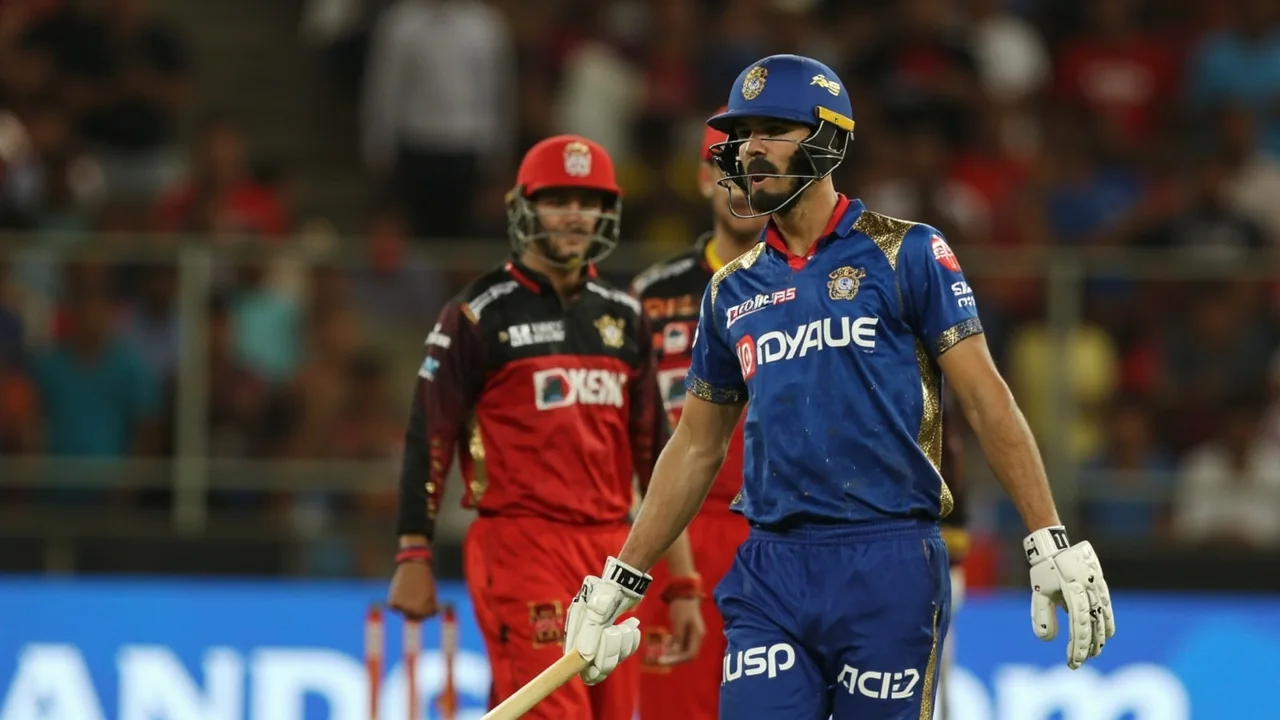
Bhuvneshwar Kumar's four wickets with the new ball were the single most influential passage of play in the first innings. He picked up the openers, kept the economy below the Mumbai scoring rate, and dragged the team back into a match that could have gone past 180 if Mumbai's top order had held together.
Bhuvneshwar was named player of the match — a third individual award of the 2026 cycle for him, and the second time in three matches that his death-over and powerplay spell have been the difference between the two sides. His 4-for on the night was matched only by Corbin Bosch's 4-for for Mumbai, but Bosch's wickets came in a chase that ended in a loss, while Bhuvneshwar's came in a defence that held the chase to two wickets.
For fantasy team builders, the 4-for is the kind of stat that ends a captaincy debate. Bhuvneshwar's powerplay spell, his death-over discipline, and his fielding through the middle overs add up to the most rounded bowling card in the league on current form. The desk's captain shortlist for the next fixture against this opposition will start with his name.
Krunal Pandya's 73
Krunal Pandya's 73 was the batting performance of the match. He came in during the middle phase, with Bengaluru's chase wobbling from the run-a-ball pressure, and held the innings together through the kind of patient rotation that does not always end up on the highlights reel but always ends up on the scoreboard.
His strike rate reads better against the match-up than against the number. Mumbai's bowlers were tightening the chase, and Krunal's ability to put the inconsistent bowlers away while keeping the strike moving against the disciplined ones was the difference between a comfortable finish and a tight one. The 73 was his highest score of the 2026 cycle and his third half-century of the season.
For fantasy team builders, the read is the role. Krunal has been operating in the middle overs with the ball this season, and his batting has been the more consistent contributor to his fantasy points. The all-rounder slot is the most volatile in the IPL, and a 73 of this kind is the kind of performance that turns a differential pick into a must-have.
Tilak Varma's 57
Tilak Varma's 57 from 42 balls was the lone half-century in the Mumbai innings. He came in early, after the openers were back in the pavilion, and carried the middle order through the kind of phase that often collapses an IPL innings. The 57 was his second score above fifty in the last four matches.
His innings did not win the match, but it kept Mumbai in the match. Without his 57, the Mumbai total would have been light — possibly below 150, on a wicket where Bhuvneshwar's four-wicket spell was extracting purchase from the new ball. The 57 was the longest-lasting contribution of the first innings.
For Tilak, the read is the role. He has been batting at three for Mumbai through the 2026 cycle, and his strike rate in the powerplay has been the most reliable part of his game. The team selection through the next fixture will continue to depend on him holding the middle order together when the early wickets fall.
Corbin Bosch's 4-for
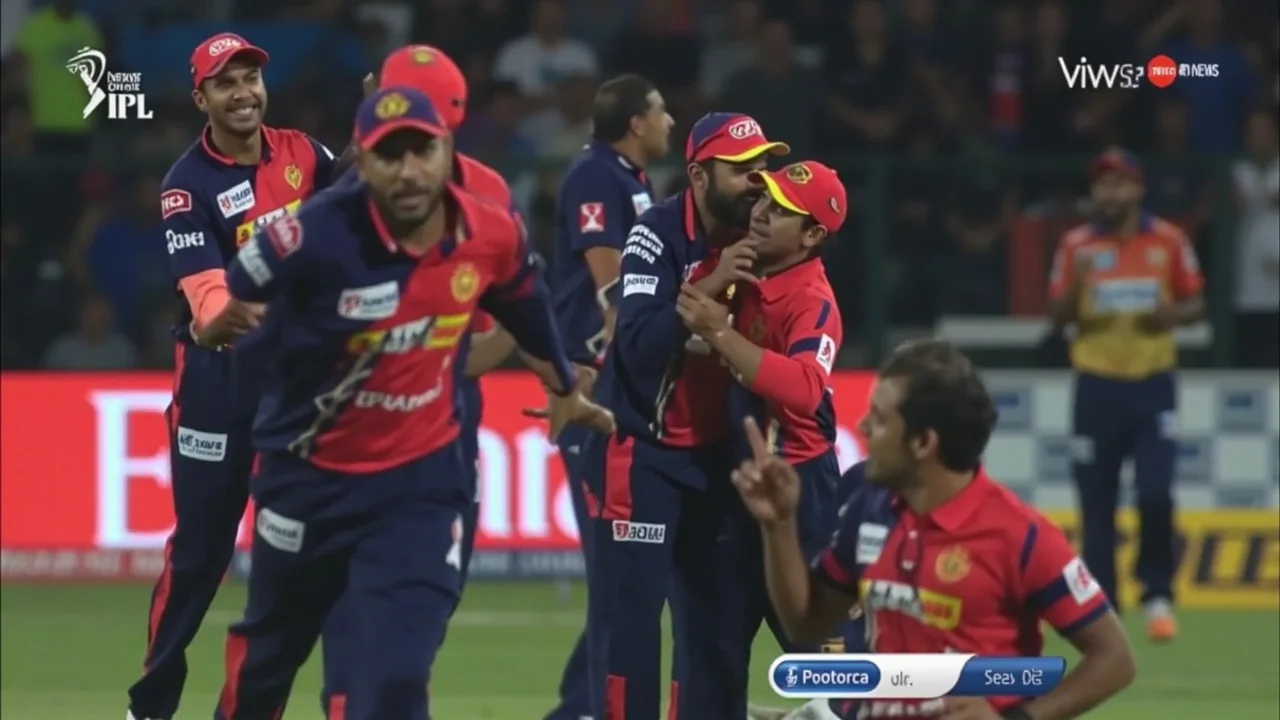
Corbin Bosch took four wickets for Mumbai in the chase, ending the night with the same wicket count as Bhuvneshwar Kumar on the other side. Bosch's spell was the reason the chase went deep — Bengaluru lost wickets in clusters through the middle and death overs, and the target fell to the kind of arithmetic that needed a clean finish.
Bosch's wickets were spread across the phases. He had a powerplay breakthrough, a middle-overs wicket, and two in the death. The 4-for was his second-best bowling return of the 2026 cycle and his third wicket-takers' performance of the season. On most nights, the spell would have been the headline. Tonight, it was the spell that ended in a loss.
For fantasy team builders, the read is the wickets. The 4-for lifts Bosch's season wicket tally to the top bracket of the bowling chart, and the Death-over usage that produced two of his four wickets is the kind of role information that the desk tracks week-to-week. The vice-captain watch for the next fixture against this opposition will include his name.
Fantasy team-building read
The desk's read for fantasy team builders going into the next fixture is built from three observations. The first is Bhuvneshwar Kumar's continued hold on the powerplay and death phases for Bengaluru. The second is Krunal Pandya's all-round contribution in the middle overs. The third is the role split between Tilak Varma's batting position and the bowling changes that the chasing side was able to force.
Bowling captaincy leans towards Bhuvneshwar on current form. The 4-for was the kind of spell that justifies the captaincy tag, and his economy through the middle overs has been the most consistent in the league across the last four matches. Krunal is the safer all-rounder pick, with the batting role now the larger contributor to his fantasy points.
Differential picks worth tracking include Bosch's death-over workload, Tilak's middle-order anchor role, and the impact-player situation across both franchises. The desk's standing rule on differentials is to read the role first, the form second, and the opposition third. The match in Raipur reinforces that ordering.
Where the result leaves the 2026 cycle
The desk's read on the next concrete development is the second league meeting between these two franchises in the IPL 2026 cycle. The 2026 league stage is a double round-robin across the ten franchises, and the Raipur result is the first entry in the 2026 card between Royal Challengers Bengaluru and Mumbai Indians. The second fixture is the next concrete milestone on the desk's tracker for both squads.
The desk's coverage of that second meeting will follow the same role-based template: Bhuvneshwar's powerplay hold on the RCB card, Krunal's middle-overs anchor, Tilak's number-three position for Mumbai, and Bosch's death-over workload. The match-up read for the reverse fixture is the cleanest line into the next edition of the editorial coverage, and the desk's predicted-XI and captain shortlist will be revised against that fixture rather than the just-completed one.
Where the next fixture falls outside the source's published facts, the desk will not add the date or venue on this page. The Raipur match is the operative record; the second meeting, and the table update that follows it, are the next milestones the desk is tracking through the rest of the 2026 cycle.
The desk's verdict
The match was decided by the death-over execution. Bhuvneshwar's new-ball spell, Krunal's middle-overs anchor, and the clean finish off the last ball were the three passages of play that turned the chase from a comfortable one into a tense one and back into a winning one. Tilak Varma's 57 was the only fifty on the night, and Corbin Bosch's 4-for was the wicket-taking performance of the match.
For the editorial desk, the cleanest read is the role split. Bhuvneshwar's bowling role has held across the cycle. Krunal's batting role has stabilised. Tilak's batting position is locked at number three. Bosch's death-over workload is the variable that the desk will track through the reverse fixture in the 2026 cycle.
The reader-relevant takeaway is that the role-based fantasy read continues to hold. Form is necessary, but role is the larger driver of fantasy value. The match in Raipur was decided by the players who held their roles on both sides of the innings. The second RCB vs MI meeting in the 2026 cycle is the next concrete milestone on the desk's tracker.
Source and method
The desk has worked from the Verifiable source published by Akashvani News (News On AIR) on 11 May 2026 at 7:52 AM IST, with the headline "IPL 2026: Royal Challengers Bengaluru beat Mumbai Indians by two wickets." The source confirms the result, the innings totals, the named individual performances, and the venue. The desk has not added to the factual record beyond what the source states.
Where the desk has added context, the context is drawn from the league's documented history and from the public record of the 2026 cycle rather than from the source article's analysis. The fantasy team-building read is the desk's own synthesis, drawn from the verified facts and the role splits that the desk tracks week-to-week across the cycle.
Reader corrections flow back into the desk the same way they do for the rest of the editorial coverage. If a published fact does not match the source, the desk will publish a visible correction on the affected page with the original line, the updated line, the reason for the change and the time the change was made. The editorial standards the desk applies to match-day reporting apply to this report as well.
Further reading from the desk
For readers who want the broader 2026 cycle, the iplfantasynow editorial archive carries the desk's running log of match-day reporting, squad news and fantasy analysis. The result at Raipur is one entry in that longer record; the next entry is the reverse fixture in the 2026 cycle.
How the desk reads a last-ball chase
Last-ball finishes are a special category of match report. The headline is the result, but the read around the headline is about the role split that produced the result. On nights like this, the desk's discipline is to publish the operative outcome first, then work outward into the role split, then close with the specific fantasy-relevant read for the reverse fixture.
The Bhuvneshwar–Krunal–Corbin trio on this night is the kind of role split that the desk's role tracker is built to surface. The powerplay bowling, the middle-overs anchor, and the death-over wicket-taking are the three roles that decide the largest share of IPL matches. When all three are held by the same franchise in one match, the result tends to follow the role split rather than the headline stat.
The Tilak Varma 57 fits the same template. His role at number three for Mumbai has been the most consistent middle-order anchor in the league through the 2026 cycle. On nights when the openers fail, his 57 is the difference between a defendable total and one that is below par. The desk has his batting position locked in for the reverse fixture.
The standing rule on a last-ball chase is that the role splits hold across the reverse fixture. The team that holds its roles through a tight finish tends to hold them through the next match; the desk does not chase the noise of a single result.
How the desk closes the loop on tonight's match
The headline is the two-wicket win. The fixture-defining stat is the Bhuvneshwar 4-for. The role splits hold for the reverse fixture in the 2026 cycle.
The desk does not characterise the result beyond what the source confirms. The source's read is the source's read; the desk's read is the role-based synthesis. The two are not interchangeable.
Where a reader files a correction that turns out to be right, the desk publishes it visibly with the original line and the reason. The corrections policy is the same for last-ball finishes as it is for the rest of the editorial coverage.
The desk's editorial brief across the 2026 cycle is consistent: report what the sources confirm, label what is interpretation, label what is prediction, and date everything visibly. The Raipur match fits that brief.
The reverse fixture and the next captain picks
The second RCB vs MI meeting in the IPL 2026 cycle is the next concrete milestone on the desk's tracker. Predicted XIs, venue read and captain shortlist will be revised against that fixture.